Bachelor of Medical Laboratory Technology - UiTM
The course provides theoretical knowledge and technical
competencies in major disciplines of medical laboratory
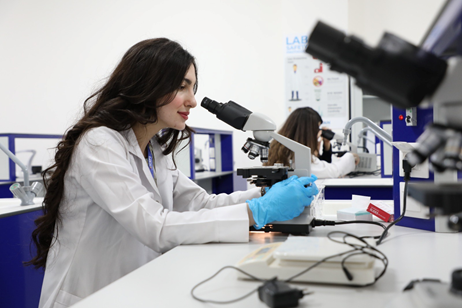
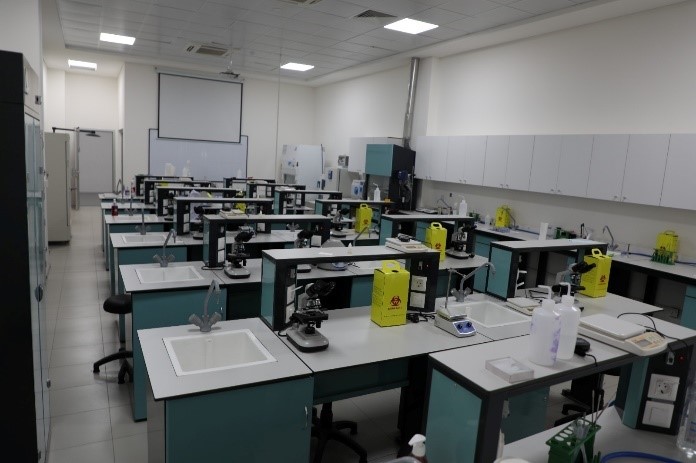
technology. Students will also be exposed to intensive practical
training in various laboratory divisions during their clinical
internship. Graduates will be awarded a degree in Medical
Laboratory Technology upon completion of the academic and clinical
requirements.
This academic programme is offered on a
full-time basis with a yearly intake. The duration of the study is
4 years/ 8 semesters. Academic activities include lectures,
practical hands-on sessions, clinical internships, blended
learning, and project-based learning. Continuous assessments and
final examinations for both the theory and practical components
are used to assess the learning outcomes and required
competencies.
The curriculum is planned based on two main
semesters and one optional short semester per academic session.
Generally, students are expected to undertake courses between
seventeen (17) to twenty-eight (28) credit hours per semester or
equivalent for credit exemption. Assessment is based on coursework
and final examinations given throughout the semester.
Program Information
| # | Awarding Institution | Universiti Teknologi MARA (UiTM) |
|---|---|---|
| 2 | Teaching Institution | Qaiwan International University |
| 3 | Programme Name | Bachelor of Medical Laboratory Technology (Hons.) |
| 4 | Final Award | Bachelor of Medical Laboratory Technology (Hons.) |
| 5 | Programme Code | HS241 |
| 6 | Professional or Statutory Body of Accreditation | Ministry of Higher Education |
| 7 | Language(s) of Instruction | English |
| 8 | Mode of Study (Conventional, distance learning, etc) | Conventional |
| 9 | Mode of Operation (Franchise, self-govern, etc) | Franchise |
| 10 | Study Scheme: (Full Time/Part Time) | Full Time |
| 11 | Study Duration | Minimum: 4 years - Maximum: 6 years |
Program Classification
| # | Classification | Credit Hours |
|---|---|---|
| 1 | Compulsory modules | 20 credits |
| 2 | Fundamental Modules, Including Basic Sciences | 15 credits |
| 3 | Professional modules to fulfill requirements of discipline | 72 credits |
| 4 | Industrial training modules Including clinical placement | 17 credits |
| 5 | Optional modules Electives | 12 credits |
| Total Credit Hours to Graduate | 136 credit hours | |
Program Educational Objectives
The Programme Educational Objectives (PEO) of the Bachelor of Medical Laboratory Technology are:
PEO (1). Medical laboratory technology practitioners who apply concepts, theories, and knowledge to evaluate, analyze, and solve diagnostic issues.
PEO (2). Medical laboratory technology practitioners who display practical competency in performing laboratory procedures and demonstrate interpersonal skills, social responsibility, and teamwork with other related professions and community, by means of effective communication.
PEO (3). Medical laboratory technology practitioners utilize a broad range of digital technologies to competently analyze laboratory data and validate findings using numerical abilities.
PEO (4). Medical laboratory technology practitioners who demonstrate leadership skills are committed to continuous improvement and display entrepreneurial skills while adhering to ethical and professional practices in the organization and society.
Program Learning Outcomes
| # | PLO | |
|---|---|---|
| 1 | Apply relevant concepts and theories in the field of medical laboratory technology. | |
| 2 | Develop thinking skills in identifying, interpreting, and solving problems associated with laboratory diagnosis. | |
| 3 | Demonstrate technical competency in performing laboratory procedures and reporting results. | |
| 4 | Display effective social responsibilities and collaborative skills when interacting with peers, clients, and stakeholders. | |
| 5 | Demonstrate effective communication by conveying information/ ideas/ reports clearly and professionally. | |
| 6 | Display information communication technology (ICT) skills in utilizing various digital applications to enhance the medical laboratory technology practice. | |
| 7 | Derive skills to utilize numerical, visual, and graphical data, in order to interpret laboratory findings. | |
| 8 | Display leadership skills in managing tasks related to the medical laboratory technology discipline. | |
| 9 | Display lifelong learning skills for continuous professional development. | |
| 10 | Demonstrate entrepreneurial mindsets and skills. | |
| 11 | Display moral values and responsibilities in adhering to ethical principles, standard requirements, professional code of conduct, and regulations in the medical laboratory technology practice. | |
Career Prospects
-
During their clinical internship, students are exposed to intensive training in various laboratory divisions. The degree is recognised and enables graduates to work as Medical Laboratory Technologists in government hospitals, private practices, research institutions, and higher education institutions.

 Huawei
Center
Huawei
Center